The Real Reason Why Architecture Firms Lose Clients
Why Your Architecture Firm Is Being Ignored (And Missing Out on Projects)
You're scrolling LinkedIn again.
Another firm—one you know doesn't have your experience and expertise—just announced they landed a new mixed-use project downtown. A project your firm would have been perfect for, but you didn't even know was available.
Or worse: You did know about it. You had a consultation. You sent a proposal. And then... crickets. Until you see their announcement three months later with a different architect's name attached.
Here's the thing nobody tells you: Your portfolio isn't the problem. Your design skills aren't the problem. Your reputation isn't the problem.
The problem is that potential clients have no idea what you actually do for them.
And when people are confused, they don't hire you. They just... move on. To someone whose message is clearer. Or someone they already know. Or (and this one stings) whoever's cheapest, because if everyone sounds the same, why not save money?
The Invisible Firm Problem
- "Award-winning design excellence"
- "Innovative solutions for modern living"
- "Client-focused architectural services"
- "Sustainable and contextual design"

The Cost of Confusion
Here's what happens when your message isn't clear:
Wrong-fit clients waste your time. You're spending hours on consultations with people who want something you don't even offer, or who can't afford your services, or who fundamentally don't value what makes you different. You're essentially running a free advice clinic for people who were never going to hire you anyway.
Right-fit clients never find you. The clients who would love working with you, who would appreciate your approach, who would happily pay your fees—they're out there. But they're scrolling past your website because they can't tell if you solve their specific problem. So they keep looking. And they find someone else.
Price becomes the deciding factor. When potential clients can't differentiate between you and three other firms, the decision defaults to price. Now you're in a race to the bottom with architects who are willing to work for less (and probably cutting corners you'd never cut). But the client doesn't know that, because everyone's message is equally vague.
You're stuck in feast-or-famine mode. Without a clear, compelling message that attracts the right clients, you're relying entirely on referrals and word-of-mouth. Which is great... until it isn't. Until referrals dry up for a few months and suddenly you're panicking about payroll.
The painful irony? You're probably great at your job. But if potential clients can't quickly understand what makes you different and whether you're right for them, they'll never get the chance to experience your work.

What Clear Messaging Actually Looks Like
Let me show you something.
Here's how Studio Z Architecture used to describe themselves:
"We are an award-winning, nationally recognized residential architecture firm based in Plymouth, Michigan, providing architecture and interior design services for homeowners in Southeast Michigan and beyond. Studio Z designs custom homes, additions, and interior remodeling projects in collaboration with our clients, contractors, landscape architects, engineers, and other professionals to ensure that our clients' visions and expectations are met."
Now be honest: After reading that, do you know what specific problem they solve? For whom? Could you explain to a friend what makes them different from any other residential firm?
Yeah. Me neither.
Here's their message after we clarified it:
"Transform your house into the home you really want...and totally deserve. Award-winning residential architecture and interior design that brings your vision of home to life."
See the difference? The first version is a resume. The second version is a promise. The first talks about credentials and processes. The second talks about the client's aspiration—the transformation they're seeking.
When Dawn Zuber, Studio Z's principal architect, saw the rewritten website for the first time, she had tears in her eyes. "It captured who we are in a way I wasn't able to achieve with my previous agency," she said.
Why the Second Version Works

The Confusion Villain
- Does this firm solve my specific problem?
- Have they done it successfully before?
- What do I need to do next?
The Words That Make You Invisible
Want to know the fastest way to blend into the background? Use the same language everyone else uses.
Words like:
- "Innovative"
- "Excellence"
- "Client-focused"
- "Award-winning" (as your opening line)
- "Cutting-edge"
- "Solutions"
These aren't bad words. They're just meaningless without context. Everyone claims to be innovative. Everyone says they're client-focused. Show me an architect who doesn't think they deliver excellence.
The problem isn't that these things aren't true about your practice. The problem is that they don't help potential clients make a decision. They're the architectural equivalent of saying "I'm nice" on a dating profile. Okay, great. So is everyone else. What makes you different?
What Changes When Your Message Is Clear
Okay, so you fix your messaging. You clarify who you help and what problem you solve. You make your website actually relatable to other humans.
What happens next?
Right-Fit Clients Self-Select In
This is the beautiful part. When your message is clear and specific, the people who need exactly what you offer will recognize themselves immediately.
"Oh, that's me. That's my problem. These people get me."
They're not just interested—they're pre-qualified. They already know you understand their situation. They're not shopping around randomly; they're reaching out because you've demonstrated that you speak their language.
Your consultation calls get better. Instead of spending the first 30 minutes explaining what you do and whether you're a fit, you're diving straight into their project. They already know you're the right choice—now they just want to see if you're available and what the process looks like.

Wrong-Fit Clients Self-Select Out
Sales Cycles Get Shorter
You Stop Competing on Price
This might be the most important shift of all.
When your message is clear and differentiated, you're no longer in a commodity market. You're not "an architect." You're "the architect who does X for Y people."
Specificity creates value. The brain surgeon who specializes in your specific condition charges more than a general practitioner—and you're happy to pay it, because specialization signals expertise.
Same principle applies here. When you're clear about what you do and who you do it for, price objections decrease dramatically. Not because you're cheaper (you're probably not), but because the right clients understand why you're worth it.
Your Competitive Advantage Is Hiding in Plain Sight
Here's the good news: Most of your competition will never fix this.
They'll keep talking about themselves. They'll keep using the same industry jargon. They'll keep wondering why their beautiful portfolio isn't generating leads.
And you? You'll be speaking directly to the people who need what you offer, in language they actually understand.
This isn't about being the best architect. You might already be the best architect. This is about being the clearest architect. The one who makes the decision easy.
Because here's the uncomfortable reality: If a potential client can't quickly figure out whether you're right for them, they'll assume you're not. They won't dig deeper. They won't call to find out. They'll just move on to someone whose message is clearer—even if that person is objectively less qualified than you.
Clear messaging won't make you a better designer. But it will make sure the right people actually find you, understand you, and hire you.
Which means you can spend less time chasing wrong-fit projects and more time doing the work you're actually good at.
The Confidence Factor
There's one more thing that changes when your message is clear: how your team talks about the firm.
When everyone in your firm—from owner to junior designers to that intern who answers the phone—can clearly articulate what you do and who you help, everything gets easier.
Networking becomes natural. "We design custom homes for families who need more space but love their neighborhood" rolls off the tongue a lot easier than "we provide comprehensive architectural services."
Your team stops feeling awkward about business development. They're not selling anymore—they're simply helping people understand whether you're a fit.
Even hiring gets easier, because potential employees can quickly tell whether your firm's focus aligns with their interests.
Clarity creates confidence. And confidence creates consistent momentum.
How Archmark Helps Architecture Firms Get Clear
Look, you didn't go to architecture school to become a messaging expert. You went to learn how to design buildings that work and inspire.
But in today's market, your technical skills only matter if potential clients can find you and understand you.
That's where we come in.
At Archmark, we've helped more than 5,000 architects clarify their message and build marketing systems that actually work. We're certified StoryBrand coaches (in fact, Bryon McCartney is the only certified StoryBrand coach working exclusively with architecture firms), and we've studied more than 10,000 architecture firm websites.
We know what works. And more importantly, we know what doesn't.
We help firms like yours move from being the industry's best-kept secret to being the obvious choice for your ideal clients. Not by changing who you are, but by helping you communicate it more clearly.
If you want to learn more about how clear messaging could transform your firm—and see specific examples of what that would look like for you—we'd love to chat.
Apply for your free Clarity Call Today! We'll look at your current messaging, and help you understand how we can help you clarify your message to attract your ideal future clients.
FAQ: Clear Messaging for Architecture Firms
Won't being specific about who I serve limit my opportunities?
This is the most common fear we hear, and it's completely backwards. When you're specific, you actually attract more of the right opportunities. Think about it: Would you rather field 500 inquiries a year and convert 5% (like Mike Sweebe was doing), or get 20 highly-qualified leads and convert 60%? Specificity doesn't limit you—it filters out the time-wasters and magnetizes your ideal clients. Plus, you can always say yes to a great project that falls outside your focus. Being known for something specific doesn't mean you can only do that thing—it just means people know what you're best at.
How do I know what makes my firm different when everyone offers similar services?
Here's the secret: Your differentiation usually isn't in what you do (everyone designs buildings), but in who you do it for, how you do it, or why you do it that way. These are the essential questions that reveal what makes you different. Your differentiation usually isn't in what you do (everyone designs buildings), but in who you do it for, how you do it, or why you do it that way. Maybe you have a unique process that eliminates change orders. Maybe you specialize in working with clients who've been burned by other architects. Maybe you're the only firm in your area that exclusively focuses on net-zero commercial buildings. Your difference might feel obvious or insignificant to you (because you live it every day), but to the right client, it's exactly what they're looking for. Sometimes you need an outside perspective to see what makes you special—that's literally what our Brand Build workshop does.
Can't I just rely on referrals? They've always worked before.
Referrals are great—until they're not. The feast-or-famine cycle happens because referrals are unpredictable. You can't control when they come in, from whom, or whether they're actually a good fit for your firm. Clear messaging doesn't replace referrals; it creates a safety net underneath them. It means when referrals slow down (and they will), you have other ways for ideal clients to find you. Plus, when your message is clear, your referral sources become better at referring you because they can actually explain what makes you different.
I'm not a marketer—do I really need to worry about this messaging stuff?
You're right—you're not a marketer. You're an architect. But here's the thing: If potential clients can't understand what you do and why you're different, your design skills never get a chance to shine. Clear messaging isn't about becoming a marketing expert; it's about communicating what you already do in a way that actually resonates with the people you want to work with. And no, you don't have to do this yourself. (That's literally why firms like yours hire us—so you can stay focused on architecture while we handle the messaging.)
How long does it take to see results after clarifying my message?
It varies, but you'll typically see shifts pretty quickly. Barron Schimberg landed his largest project ever (a $13 million Humane Society building) just two weeks after we rebuilt his LinkedIn presence with clear messaging. Roderick Anderson at SARCO saw a 191% increase in website traffic within 90 days, plus 21 new keyword rankings. But here's what's more important than speed: quality. You might not get more leads immediately, but the leads you do get will be dramatically better fits—which means higher conversion rates, less wasted time, and more enjoyable projects. That shift often happens within the first few months.
Ready to stop being ignored and start attracting the clients your firm deserves? Apply for your free Clarity Call and let's figure out how to make your firm the obvious choice for your ideal clients.
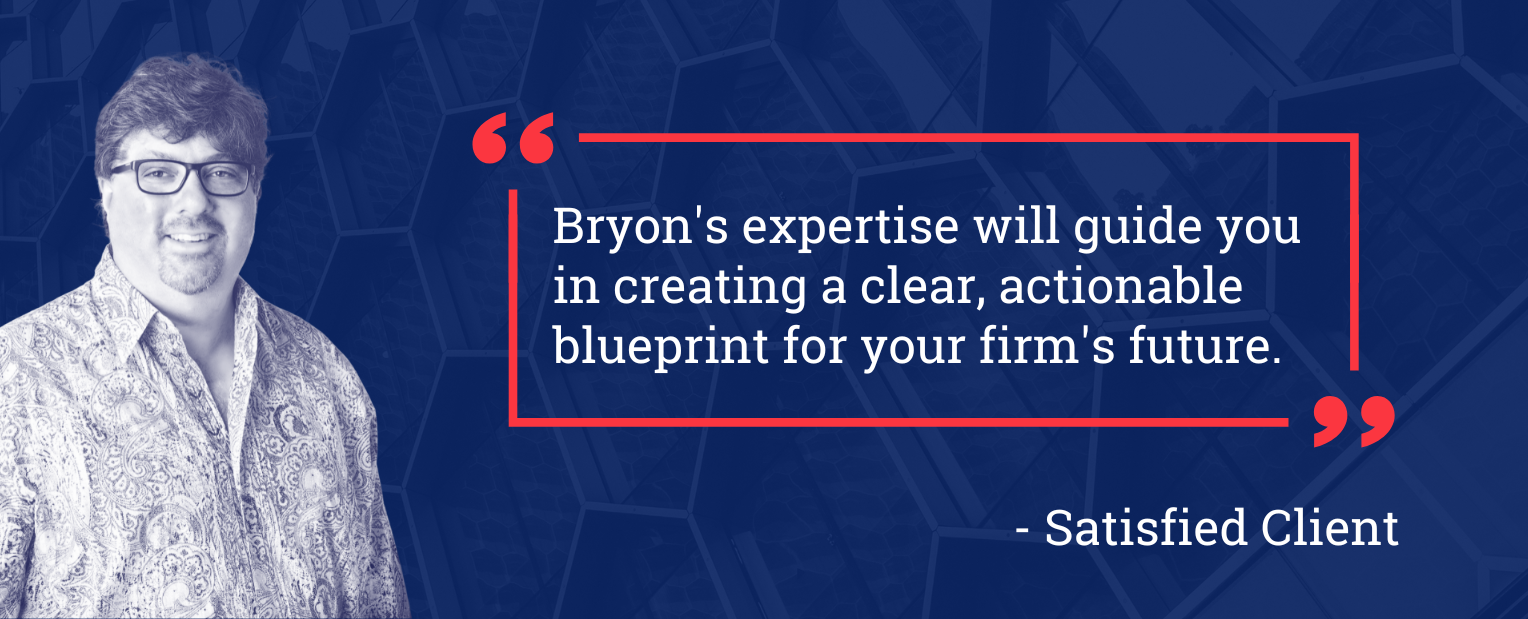
Bryon McCartney is the CEO of Archmark and a certified Business Made Simple, Hero on a Mission, Small Business Flight School, StoryBrand, and Unreasonable Hospitality Coach. He's helped 5,000+ architecture firms move beyond hope marketing to build systematic client acquisition processes that actually work.